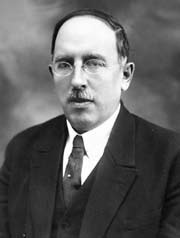
Sadri Maksudi Arsal (23 July 1878 – 20 February 1957) was a Turkish-Tatar statesman, jurist, academic, thinker, and politician.
He was a statesman who became the head of the National Administration (Millî İdare) founded in Ufa in 1917 and of its parliament, the National Assembly (Millî Meclis). After the Bolsheviks abolished the National Administration, he moved to Western Europe, and during the founding years of Turkey he was invited to Turkey by Mustafa Kemal Atatürk. He is among those who laid the foundations of Turkism in Turkey.
He was among the founding professors of the Ankara Faculty of Law, the Republic's first law faculty. He made significant contributions to the establishment of the Turkish Language Association (Türk Dil Kurumu) and the Turkish Historical Society (Türk Tarih Kurumu).
In the Grand National Assembly of Turkey (TBMM) he served as a member of parliament for Şebinkarahisar in the 4th term, Giresun in the 5th term, and Ankara in the 9th term.
He was the father of Adile Ayda, the first woman diplomat (1932) to enter the Turkish Foreign Service.
The famous Russian writer Tolstoy referred to Sadri Maksudi as the "Clever Tatar Boy."
Life
He was born in the village of Taşsu, outside Kazan, the capital of the autonomous Republic of Tatarstan within today's Russian Federation. His father was the village imam Nizamettin Molla, and his mother was Meftuha Hanım. In Russia his name was "Sadrettin Nizamettinoviç Maksudov."
Years of Education
After completing his primary education at the village school, in 1888 he went to the famous Allâmiye Madrasa in Kazan. He continued his studies alongside his elder brother Ahmet Hadi Maksudi, who taught at the same madrasa. His elder brother, who would later become a renowned pedagogue and one of the leading Jadidists of Kazan, played a great role in his upbringing. During his Kazan years, he learned Ottoman Turkish by reading children's novels that came from Istanbul, and translated the Ottoman Turkish version of Robinson Crusoe among these novels into Kazan Turkic.
In 1895 he went to Bahçesaray together with his elder brother, who had been invited to teach at the Zincirli Madrasa there. He met İsmail Gaspıralı, who taught at the same institution and whom he would later remember as "my spiritual father." During the 1895–1896 academic year he spent in Bahçesaray, he attended the classes at the Zincirli Madrasa and learned Russian.
In 1897 he entered the Russian Teachers' School. His enrollment in this school was criticized by the Turkic community because it was seen as a danger of Russification. His first short-story attempts were published in 1899–1900. In 1900 he published his novel titled "Maişet" in Kazan. He explained his aim in writing the novel as "to contribute to Tatar becoming a national literature."
After finishing the Teachers' School in 1901, on his elder brother's suggestion he wished to continue his education in Istanbul. However, he did not want to leave Russia without first meeting Leo Tolstoy, whose books he had read and admired during his years at the teachers' school. In the summer of 1901 he went to Yasnaya Polyana and visited the writer, then 73 years old, at his home. During their conversations lasting for hours, the famous writer, who was greatly taken with Sadri Maksudi, patted him on the back several times, calling him the "Clever Tatar Boy"
Membership in the Duma
After completing his education and returning to Russia in 1906, Sadri Maksudi took an interest in politics and was elected a member of the Second Duma (parliament) from Kazan. When the Second Duma was dissolved a short time later, as a result of the new elections he became a member of the Third Duma and gave voice to the problems of the Turks of Russia. Drawing attention with his impassioned speeches in the Duma, Maksudi was elected to the Presidential Council. When he was included in the parliamentary delegation that went to England in 1909, the articles in which he conveyed his observations were later published in Kazan as a book titled "Travel to England."
In 1911 he married Kamile Rami; from this marriage he had two daughters named Adile and Naile. In 1913 he began practicing law.
Presidency of the Idil-Ural State
In 1917 he had the "National-Cultural Autonomy" Project adopted by the Congress of the Muslims of Russia. He prepared the constitution of the autonomous state named the "National-Cultural Turk-Tatar Autonomy of Inner Russia and Siberia," proclaimed in Ufa in 1917. In November 1917 he was elected head of the "National Assembly" (Millî Meclis) that had been formed. He also assumed the presidency of the "National Will" (Millî İrade), established to conduct state affairs and consisting of three ministries. This political entity, which was expected to develop into an independent Idil-Ural Nation-State, was not long-lived. Shortly afterward the National Assembly was dispersed by the Russians and the National Administration was abolished.
Flight to Europe
Following the abolition of the National Administration, while returning from Ufa to Russia, Maksudi crossed into Finland with the help of the religious scholar Musa Carullah. Moving to Paris in 1919, Maksudi submitted a memorandum concerning the demands of the Muslims of European Russia to the Paris Peace Conference convened in 1920 after the First World War.
In 1922 he settled in Berlin with his family, left politics, and turned to academic work. In 1923 he settled in Paris with his family and lectured on the history of the Turk-Tatar peoples at the Institute for the Study of Islamic Countries attached to the Faculty of Letters of the Sorbonne University.
Years in Turkey
At the invitation of the Turkish Hearths (Türk Ocakları), Sadri Maksudi delivered a series of lectures in the new Turkish Republic in 1924. On 24 November 1924 he met Mustafa Kemal Pasha at Çankaya. He accepted the offer to take up a position in the newly founded Republic of Turkey. In 1925 he came to Turkey and settled there; he was appointed a member of the Committee for Composition and Translation (Telif ve Tercüme Heyeti) attached to the Ministry of Education in Ankara. After this committee was disbanded, he was among the founding professors of the Ankara School of Law; he taught at this institution for many years.
His role in the establishment of the Turkish Language Association
In 1930 Sadri Maksudi published as a book the writings he had published in 1928 in the Milliyet newspaper under the title "The Question of Language Reform," and presented it to President Mustafa Kemal. This work, titled "For the Turkish Language," to which Mustafa Kemal wrote the preface, was influential two years later in the issuing of the directive to establish the Turkish Language Association. Mustafa Kemal's pithy words in the preface of this book were inscribed on the tablet in front of the Turkish Language Association building.
His role in the establishment of the Turkish Historical Society
The history committee whose establishment he proposed in the speech he delivered at the 6th Congress of the Turkish Hearths on 27 April 1930 came into operation in 1931 under the name the Society for the Study of Turkish History. Sadri Maksudi became a member of this society, in whose founding he played a role and which would later take the name the "Historical Society." He was among the authors of the work "The Main Outlines of Turkish History" (1930), which set out the official history thesis. He later used the knowledge he gained during this project while developing his "History of Turkish Law."
Sources
- Turkish Wikipedia: tr.wikipedia.org
- English Wikipedia: en.wikipedia.org