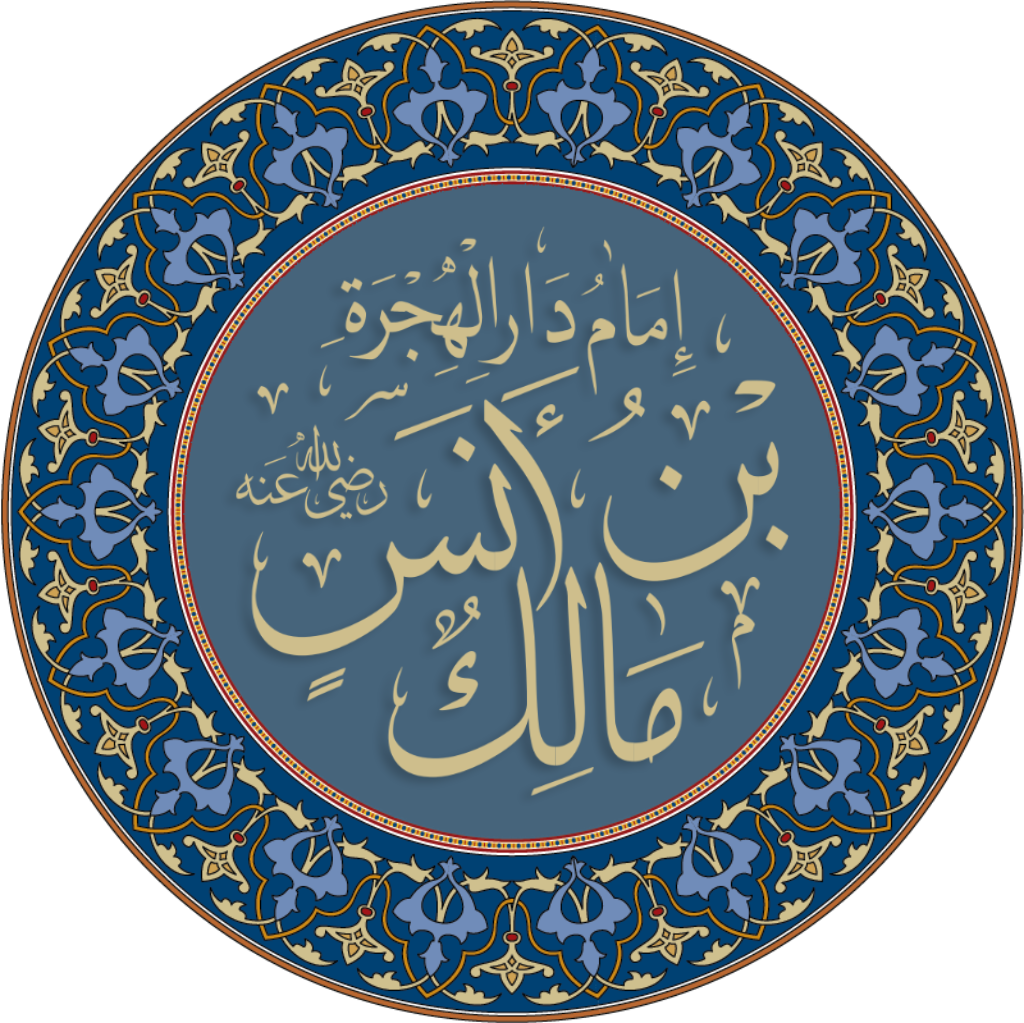
Malik ibn Anas (Arabic: مالك بن أنس; b. 712, Medina – d. 7 June 795, Medina) was the founder of the Maliki school, a mujtahid and a hadith scholar (muhaddith).
His Identity
Abu Amir, whose name appears in the lineage, was one of the Companions of the Islamic Prophet and took part with him in all the battles except Badr. His son Malik — that is, Imam Malik's grandfather — was one of the great figures of the Tabi'un (Successors). He migrated from Yemen to Medina. He transmitted from the Companions Umar, Talha ibn Ubaydullah, Aisha and Abu Hurayra. His sons — that is, Imam Malik's uncles — were Abu Suhayl, Nafi, Uways, Rabi and Nadr. Malik ibn Abi Amir died in the year 102. Imam Malik's mother was Aliya bint Shurayk al-Azdi. Imam Malik had two sons named Yahya and Muhammad, and a daughter named Fatima.
His Life
Imam Malik was born in Medina in the year 93. Apart from the Umra and the Hajj, he never left Medina. Indeed, Caliph Harun al-Rashid summoned him to Baghdad, the centre of the caliphate, but he refused. He began his studies at a little over 10 years of age. According to tradition, one day Imam Malik's father posed a question. When Imam Malik made a mistake and his brother Nadr gave the correct answer, his father reproached Imam Malik, saying "the pigeons have distracted you" — he was probably interested in pigeons when he was young. Deciding thereupon to pursue learning, Malik studied for seven — or, according to one account, eight — years under Ibn Hurmuz (148). After this he joined the teaching circle of Rabi'at al-Ra'y. According to an account related by Imam Malik, when he told his mother that he would study, his mother called him and dressed him in new clothes. Then she said, "Now go and write." Standing out among his peers, Malik began to issue fatwas and to teach at the age of 21. His lessons were followed with intense interest. Students came to Medina from distant lands to attend his lessons.
Among his teachers are such names as Nafi (117/735), Sa'id al-Maqburi, Amir ibn Abdillah ibn Zubayr (124/741), Zuhra (124/741) and Abdullah ibn Dinar (127/144). In the Muwatta he transmitted from about 90 people. It is said that he himself had around 900 teachers. The number of his students is expressed in the thousands. But among the most important of those who worked to spread his views and school are such names as Abdullah ibn Wahb, Abd al-Rahman ibn al-Qasim, Ibn Ziyad al-Absi, Asad ibn al-Furat, Yahya ibn Yahya al-Laythi, al-Qa'nabi, al-Waqidi and Ibn al-Majishun.
His Works
Imam Malik died in Medina in the year 179 and was buried in the Baqi cemetery in Medina. His funeral prayer was led by the governor of Medina, Abdullah ibn Muhammad.
Foremost among Imam Malik's works is the hadith work titled al-Muwatta, which also contains the practice of the people of Medina and the fatwas of the Companions and the Successors. Nine transmissions (recensions) of the book have survived to the present day. Besides this, there are also Tafsir Gharib al-Qur'an, a letter he wrote to Ibn Wahb concerning divine decree (qadar), and letters he wrote to Harun al-Rashid, to Layth ibn Sa'd, to certain qadis, and so on.
Regarding the "Muwatta," Imam al-Shafi'i's statement that this book is the most authentic book after the Book of God, Ibn al-Mahdi's statement that it is the most beneficial book after the Book of God, and the words of scholars about this book, all serve to demonstrate the importance of the work.
Sources
- Turkish Wikipedia: tr.wikipedia.org
- TDV Encyclopedia of Islam: islamansiklopedisi.org.tr
- English Wikipedia: en.wikipedia.org